There is a permanent page for this post here . Update: I recently attempted an analysis of what the cow hides actually list, which you can view at your own risk on the permanent page.
The 1550 Lay Subsidy was one of several mid‑Tudor tax assessments imposed during the reign of Edward VI, a period marked by economic strain, inflation, and the financial aftershocks of Henry VIII’s reforms. Subsidy rolls like these were compiled at the level of the Hundred and list householders who were taxed on goods, land, or wages, making them one of the most important surviving population records between the 1520s and the first parish registers. For East Sussex, the 1550 assessment is especially valuable: many parish registers begin decades later, and few other documents record ordinary residents with such precision. These rolls therefore provide a rare snapshot of local society in the years immediately following the Dissolution of the Monasteries, capturing the names, relative wealth, and settlement patterns of Tudor families across the county.
In 2009 I paid for the National Archives to copy these Lay Subsidy Rolls (tax payments collected on cow hides), because nobody has previously requested this be done, so they were not available. These rolls (rots) may also be relevant to other genealogists, so I am sharing high resolution images of them here. I still have a record of the receipts.
This post provides high‑resolution scans of the 1550 East Sussex Lay Subsidy Rolls, covering the Hundreds of Lewes, Horsham, Cuckfield, Rotherfield, Mayfield, and Hartfield. These rare cowhide roll images preserve the original Tudor‑era tax assessments, listing householders, valuations, and payments in remarkable detail. Although the handwriting is challenging and full transcription remains incomplete, many entries are legible and offer valuable insights for genealogists, local historians, and researchers of early modern Sussex. The scans are in the public domain and freely available here for study and analysis.
Key
Amounts are usually given in Pounds, Shillings and Pennies
The ‘j’ indicates the last penny of each amount
Note
It would take me far too long to order these rolls (rots) according to their Borough, village or district and I could easily make a mistake, because they are so hard to read. Thus I will simply list them with their Roll file index name and leave it to others to dig further!
View images at full size by clicking on them.
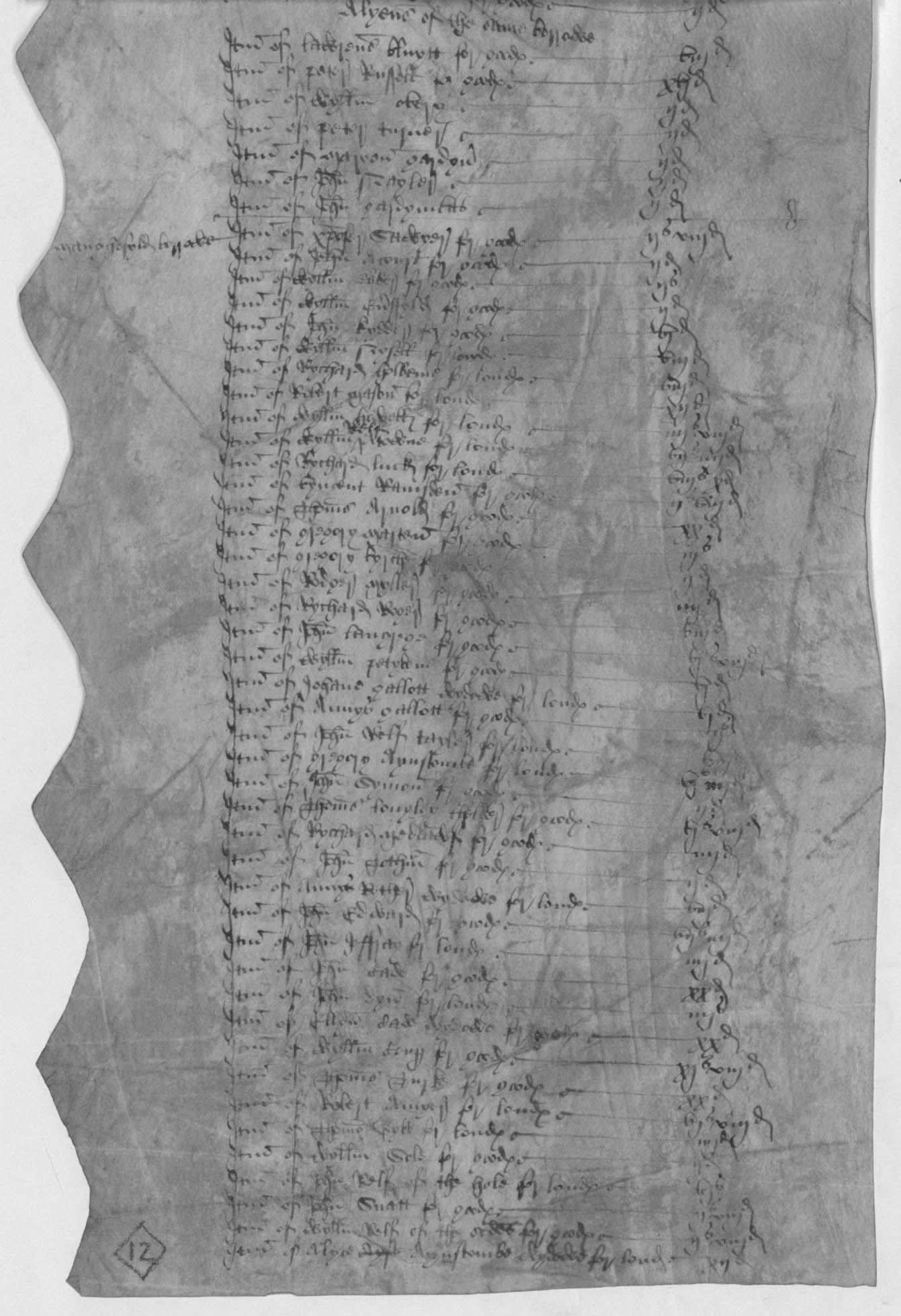


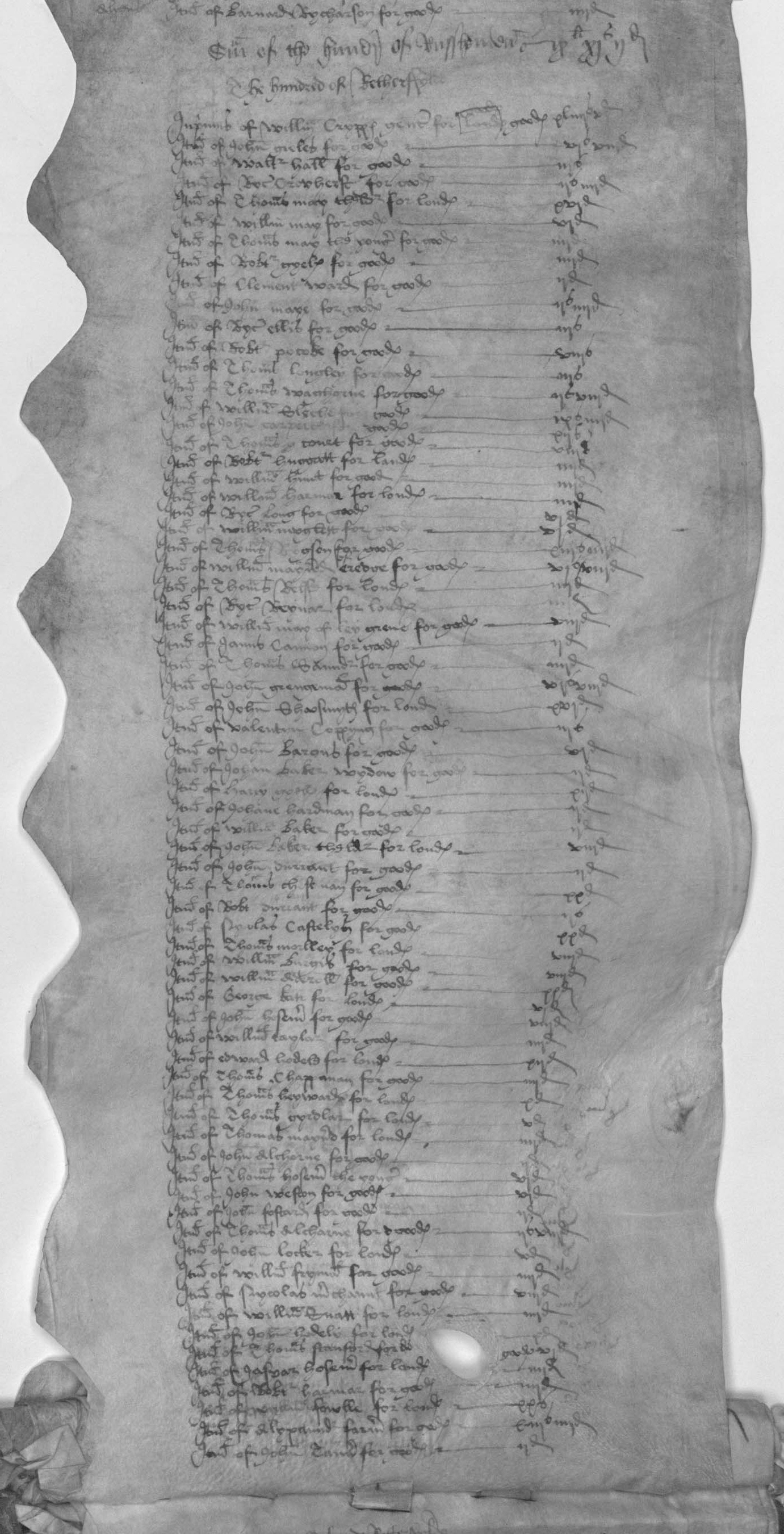


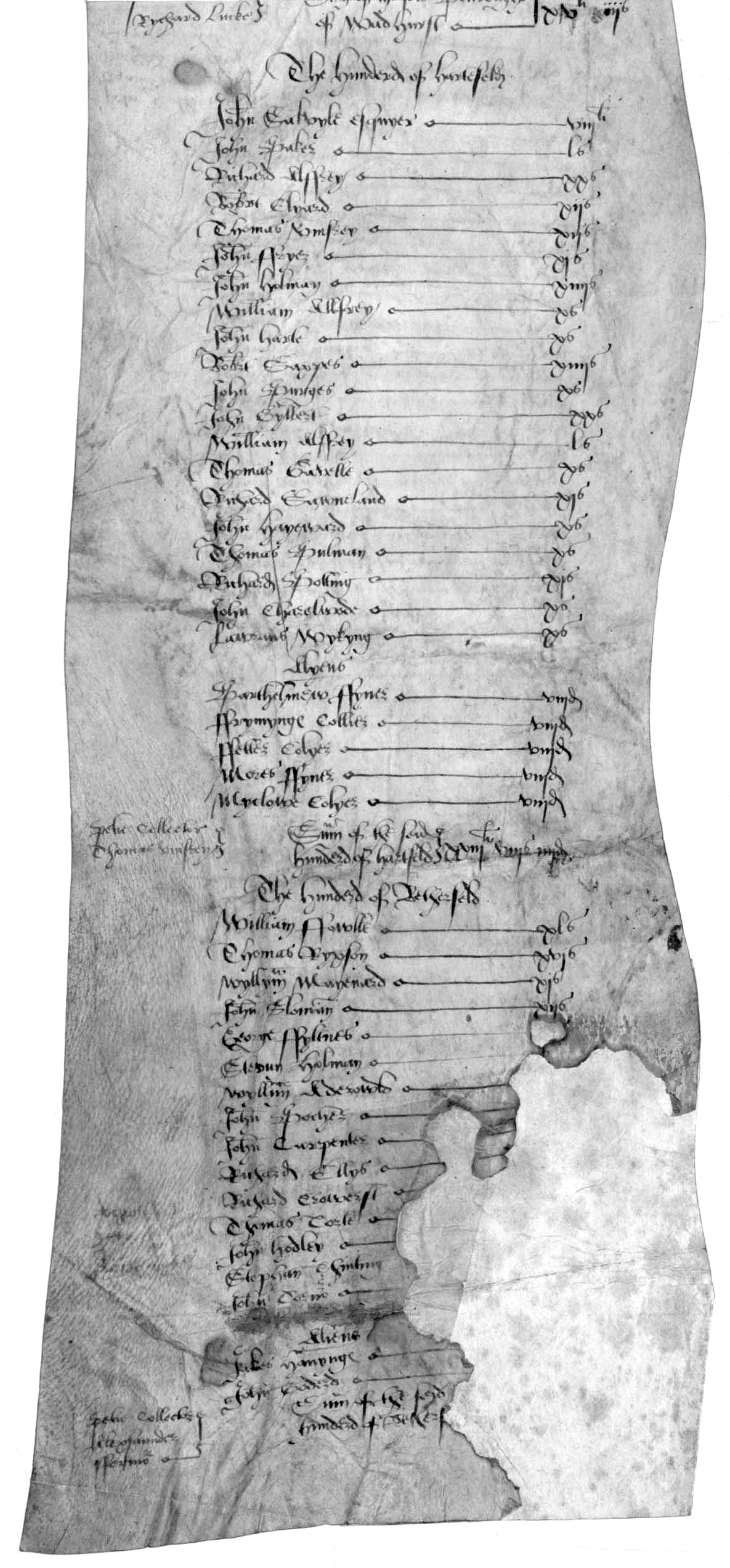

View images at full size by clicking on them.
These are the relevant notes from the National Archives:
1. Document Reference(s): E 179/190/191
This certificate of assessment and individual assessment expressly relate to the levy in the rape of Pevensey in Sussex of the first payment of the subsidy granted to Henry VIII in 1543. The certificate, which also includes a list of the petty collectors appointed in the hundreds and boroughs, is dated 10 November 1543, and on its dorse is a note recording that the document was returned into the Exchequer on 29 November 1543. Aliens are listed separately, for the most part, and household servants of the wealthier payers are noted in the margins and bracketed, in some places.
Dates
Date Of Document 1543 Nov 10
Date Into Exchequer 1543 Nov 29
Grants
1) subsidy, 1543 Jan 22 x May 12, 1st: 1544 Feb 6
Instructions for Copying: Sheet showing all aliens (if separate sheet) and
then Hartfield, Rotherfield, Ardingly (not present), Mayfield,
Cuckfield, Horsham Borough (if possible), Lewes (if
possible).
2. Document Reference(s): E 179/190/239
All the items in this roll are concerned with the second payment of the ‘relief’ granted to Edward VI in March 1549. All the documentation from each of the Sussex rapes has been stitched into the roll, some assessments facing the opposite way to others, so that the roll is confusing to find one’s way around. In addition, each rape’s assessments are on rotulets of different widths, and that for Bramber is on one long rotulet comprising 5 individual membranes. Readers should be warned that the roll is therefore unwieldy to handle. However, the place-names have been indexed in the order in which each assessment should be read, in the hope that this will assist readers who wish to use the document. The rotulets in the roll are as follows:
Rot 1: Certificate for Bramber rape, dated 18 April 1550, endorsed with a return date of 29 April 1550.
Rot 2 (5 mm): Assessment of Bramber.
Rot 3: Certificate for Hastings rape, dated 12 April 1550.
Rot 4: Appointment of collectors for Hastings rape.
Rots 5-9: Assessment of Hastings rape, rot 9 endorsed with a return date of 28 April 1550.
Rots 10-11: Certificate and assessment of Lewes rape, the certificate dated 4 March 1550, and the assessment endorsed with a return date of 3 May 1550. These two rotulets were inserted in reverse order, so that the certificate and the start of the assessment are on rot 11 and continue onto rot 10.
Rots 12-16: Certificate and assessment of Arundel rape, the certificate dated 19 April 1550, and the assessment endorsed with a return date of 25 April 1550. Also in reverse order, the certificate and beginning of the assessment forming rot 16 (2 mm) and continuing through to rot 12.
Rots 17-24: Certificate and assessment of Pevensey rape, the certificate dated 21 April 1550, and the assessment endorsed with a return date of 26 April 1550. Also in reverse order, the certificate being rot 25, and the assessment commencing on rot 23 and continuing through to rot 17.
Rots 25-26: Certificate and assessment of Chichester rape, the certificate dated 15 April 1550, and the assessment endorsed with a return date of 28 April 1550. These two rots are extremely wide and have been folded down the middle to fit them into the roll, being stitched only along half their connecting edges. Readers should open them out with care.
Date Of Document 1550 March 4 – April 21
Date Into Exchequer 1550 April 25 – May 3
Instructions for Copying: Hartfield, Rotherfield, Ardingly (not present), Mayfield, Cuckfield (if possible), Lewes Borough, Horsham Borough
all sheets showing alien servants.

