I have just returned from a two-week holiday. I had a lovely time and I see that not only is Running selling well but that Amazon have price-matched Books2Read and made it Free, which is great, so grab your copy today:
The other news is that I am very close to finishing the cover design for Iron III: Worlds Like Dust: part 1 so get ready for the climax of Jake Nanden’s adventures!
15% off for Tourists Billboard in Mauritian shopping mall
Finally, a friend sent me this photo of a sign in a Mauritius shopping mall which beggars belief. Seems that, in that gorgeous country, local people have to pay more for goods than tourists. What blatant discrimination! What sort of way is that to treat your own citizens?
I am only about a month away from releasing Volume 3 of the Iron Series, Worlds Like Dust, and I am sure you weren’t expecting this but I managed to slip in another book; a prequel to the Iron Series. The idea for this book had been germinating in my mind for some time but I knew it wouldn’t be a full-length novel. In fact, Running – The Alien in the Mirror is only 32,000 words – a novella – but I hope you will like it. I think it’s a very good story and a fast read, in both senses of the word!
Illuminati, assassins and Templar knights all come together in the terrifying, violent climax to the thrilling series!
The Synchronicity Code is book 4 in the Ordo Lupus and the Blood Moon Prophecy series, which precedes the Grail of the Secret Sun, part one of The Hole Inside the Earth – quest for the the Holy Grail.
An immortal Greek mercenary abandons his quest to meet Christ in Jerusalem so he can rescue a dying archaeologist.
The mercenary, Zosimyache, is a libertine vampire who travels through time, aloof from mankind. He is looking for absolution but things become more complicated when he finds out that the archaeologist is a werewolf.
With only three days to live, the werewolf persuades Zosimyache to help him rescue his lover, the beautiful but treacherous witch, Georgina, from Hell.
But Zosimyache will get a bigger surprise than he could ever have imagined in the struggle to save Georgina.
A cosmological thriller that will open your eyes and close the book on the Ex Secret Agent trilogy, but Zosimyache’s story will go on…
If sexy witches, vampires and werewolves are your thing, this book is for you!
Mara bar ‘Serapion Mara bar ‘Serapion, (Classical Syriac: ܡܪܐ ܒܪ ܣܪܦܝܘܢ), sometimes spelled Mara bar Sarapion, was an Assyrian Stoic philosopher in the Roman province of Syria. He is only known from a letter he wrote in Syriac to his son, who was also named Serapion, which allegedly refers to him seeing Jesus Christ in Jerusalem (possibly the only eye-witness account of Jesus Christ).
Place de la Révolution The Place de la Concorde (French pronunciation: [plas də la kɔ̃kɔʁd]) is one of the major public squares in Paris.
During the French Revolution the statue of Louis XV of France was torn down and the area renamed Place de la Révolution. The new revolutionary government erected the guillotine in the square, and it was here that King Louis XVI was executed on 21 January 1793.
Knights Templar The Poor Fellow-Soldiers of Christ and of the Temple of Solomon (Latin: Pauperes commilitones Christi Templique Salomonici), commonly known as the Knights Templar, the Order of Solomon’s Temple (French: Ordre du Temple or Templiers) or simply as Templars, were among the most wealthy and powerful of the Western Christian military orders and were prominent actors in Christian finance. The organization existed for nearly two centuries during the Middle Ages.
Officially endorsed by the Roman Catholic Church around 1129, the Order became a favoured charity throughout Christendom and grew rapidly in membership and power. Templar knights, in their distinctive white mantles with a red cross, were among the most skilled fighting units of the Crusades. Non-combatant members of the Order managed a large economic infrastructure throughout Christendom, innovating financial techniques that were an early form of banking, and building fortifications across Europe and as far as Jerusalem in the Holy Land.
The Templars’ existence was tied closely to the Crusades; when the Holy Land was lost, support for the Order faded. Rumours about the Templars’ secret initiation ceremony created distrust and King Philip IV of France, deeply in debt to the Order, took advantage of the situation. In 1307, many of the Order’s members in France were arrested, tortured into giving false confessions, and then burned at the stake. Under pressure from King Philip, Pope Clement V disbanded the Order in 1312. The abrupt disappearance of a major part of the European infrastructure gave rise to speculation and legends, which have kept the “Templar” name alive into the modern day.
Ophites The Ophites or Ophians (Greek Ὀφιανοί Ophianoi, from ὄφις ophis “snake”) were members of a Christian Gnostic sect depicted by Hippolytus of Rome (170–235) in a lost work, the Syntagma (“arrangement”). It is now thought that later accounts of these “Ophites” by Pseudo-Tertullian, Philastrius and Epiphanius of Salamis are all dependent on the lost Syntagma of Hippolytus. It is possible that rather than an actual sectarian name Hippolytus may have invented “Ophite” as a generic term for what he considered heretical speculations concerning the serpent of Genesis or Moses.
Apart from the sources directly dependent on Hippolytus (Pseudo-Tertullian, Philastrius and Epiphanius), Origen and Clement of Alexandria also mention the group. The group is mentioned by Irenaeus in Against Heresies (1:30).
Fire and Stone Cut in kenjutsu “Fire and Stone’s Cut” refers to when your swords clash together. Without raising your sword, you cut as strongly as possible. This means cutting quickly with hands, body, and legs.
Unfinished Cologne cathedral, 1856 with ancient crane on south tower
The foundation stone of Cologne Cathedral was laid on 15 August 1248, by Archbishop Konrad von Hochstaden. The eastern arm was completed under the direction of Master Gerhard, was consecrated in 1322 and sealed off by a temporary wall so it could be in use as the work proceeded. Eighty four misericords in the choir date from this building phase. In the mid 14th century work on the west front commenced under Master Michael. This work halted in 1473, leaving the south tower complete up to the belfry level and crowned with a huge crane that remained in place as a landmark of the Cologne skyline for 400 years.
Do you remember reading those wonderful books in the 70s by authors like Erich von Daniken and the like, all about aliens visiting Earth milienia ago? How I miss the simple optimism of those books. But now, somebody has actually discovered something strange in the great pyramid:
Remember a few years ago, scientists and engineers managed to get a small wheeled-vehicle up one of those two narrow shafts that lead from the King’s Chamber (tomb) to the exterior of the pyramid in the direction of certain stars? They came up against a tiny wall and although the little robotic vehicle could peer over it, nothing could be seen in the small chamber opposite. They ran out of funding.
Well, they have funding again and last month managed to break through the wall. They found what looks like a robotic vehicle from ancient Egypt! Imagine that! It is battery powered.
You can find out more about ancient pyramids and how they might have originated in my book Unknown Place, Unknown Universe. BOOK 3 in the series, Worlds Like Dust, will be published some time in the next two months. Watch the trailer for Unknown Place, Unknown Universe below. I hope you like it, and if you do, or have anything else to say about this post, please leave a comment.
The Devil’s Own Dice is mostly set in 13th Century Burgundy, France and covers the great Battle of Bouvines, which shaped Europe for the next few hundred years. I have had a look on the internet for any tours of the battle sites in the book and the best I can come up with is Battlefield Tours by Leger Holidays who have many tours to France, mostly for battles of WWII.
But they also do a tour of Burgundy so that might be worth checking out.
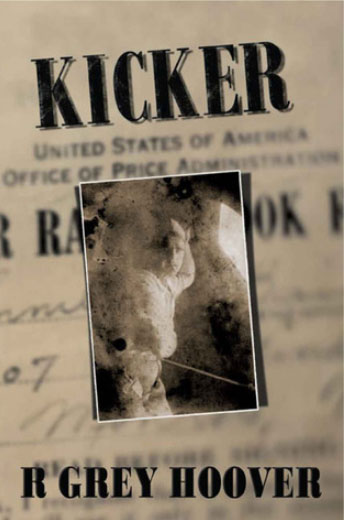
I just finished reading Kicker by Grey Hoover; about Kickers, the men who ‘kicked’ cargo out of freight aircraft in the Far East during WWII. Its a very interesting book and left me speechless in places. Here is my review:
It is with great pleasure that I review the biography Kicker, and it’s not often I can say that!
I pride myself on knowing a lot about WWII but I knew nothing about ‘Kickers,’ the brave men who kicked the supplies out of American transport aircraft in the Far East Theatre, during the War.
Into this chaotic, dangerous and inhospitable world comes Private Sam Huber. He applied himself to the task at hand without complaint and soaks up the help of veterans around him and the exotic sights that surround him.
I see that BP (British Petroleum) stocks are up in the UK and USA so maybe now is a good time to invest in petrochemicals.
Fuel has always been expensive, and more importantly during wartime, heavy. In September 1943, when the heroes of Attack Hitler’s Bunker! were trying a precision bombing attack on Hitler’s Bunker in Berlin, that latest Hawker Hurricane, the MKII, required all of its 97 gallons of high-octane fuel, 34.5 gallons each in wing tanks and 28 in a small tank ahead of the cockpit, to achieve a range of 600 miles. It could carry 2 x 500 lb canisters or bombs but would barely be able to reach Berlin from Norfolk, let alone carry out the attack and return.
Drop tanks were not yet available for Allied aircraft and in fact even the German Luftwaffe had limited use for them. Not until October, did the first P-47 Thunderbolts arrive in the European Theatre of War, equipped with drop tanks. But P-47s were to big to negotiate the streets of Berlin in the sort of precision attack required to hit the Bunker and the attack had to be made in September. Continue reading “How much gasoline to reach Berlin in 1943?”→
Yes, they are coming; book trailer videos for some of my books.
I haven’t decided which, but probably the Ordo Lupus series, Iron series and Attack Hitler’s Bunker!
I have already put together rough versions for Too Bright the Sun and Ordo Lupus and the Temple Gate. The scripts are below. I am always looking for input and feedback so if you want anything changed in the scripts, please comment below. If you want to see the rough videos, you will need to have a subscription to the Newsletter (no longer available) and have a gmail (or yahoo) account. If you have both, you should already be able to see the videos by clicking on the links below. If you don’t, then sign up for the Newsletter right away! Continue reading “Book trailer videos for Lazlo Ferran?”→
Why is a notorious religious cult of assassins keeping him alive?
A former WWII MI6 agent, our anonymous hero is suspected of the crime by the police and his divorcing wife.
With strange powers of foresight, he goes on the run to clear his name. He has only one friend, a historian and member of the modern Knights Hospitaller, but with this help, he embarks on a white-knuckle ride to salvation.
In Paris, a witch servant of the mysterious Catholic assassin sect Concilium Putus Visum seduces him during his quest for the secret weapon of the Cathars. If he can solve a puzzling set of clues to find the weapon, he might kill the monster and save his marriage.
But why do the assassins and the vampire snakes seem to be protecting him? Why is his grandfather’s body no longer where it should be; in his grave? What supernatural secret about the family was the old man trying to reveal to him before he died?
Lovers of Dan Brown’s evocative mix of mystery and history will love this Occult Thriller – a dark and powerful, nerve-shredding tale, which neatly deftly combines crime thriller aspects with the occult and historical.
If you love sexy witches, sexy vampires and sexy werewolves, you will adore The Devil’s Own Dice.
From Lazlo Ferran
My own family’s roots, uncovered gradually over ten years of concerted research had led me to one Guillaume – a Chevalier (Knight) in 13th Century Languedoc, France. He was my earliest ancestor. Simultaneously, I was pursuing a theological interest in the Cathars; first through reading a number of books by Henry Lincoln, and later an interest in Monségur and the Rennes-le-Château, near where the lost treasure of the Cathars is said to be hidden. The Cathars were an ancient sect who came to prominence and were ruthlessly persecuted by the Catholics in the 1300s, mainly in and around the Languedoc Region of France. Their beliefs were gradually imported from the Mediterranean via the Balkans and possibly originated in Paulian beliefs in post-Roman Istanbul (ancient Constantinople). They believed that the Christian god was really Rex Mundi, or ‘God of Earth’ and that he was an illusion created by dark forces, while the real God remains hidden somewhere outside Earth. I quite possibly sympathise with the Cathars, because my later ancestors probably escaped the Catholic persecution of Huguenots when they came to England in the 1500s.
These two areas of interest came together for me when I discovered that one of my ancestors, a Knight in Nevers, Burgundy during the 1200s, was cast out by the Catholic Church and prosecuted for some unknown violation. It resulted in him having to pay the church an annual tithe of a man’s weight in wheat. What his misdemeanour was, I cannot say, but he was certainly very wealthy and his daughter married well, so it must have been a personal crime against the Church. Was he a heretic, or even a Cathar, even though officially they had all been killed in Monségur 200 years before? I may never know, but it started a train of thought which led to me deciding to write a book about heresy in France, and the political implications for a country that was being slowly formed from part of the Frankish Empire.
A year before I started this work, I read both The Da Vinci Code and Angels and Demons by Dan Brown. These books were certainly an influence on me, and Dan Brown’s masterful handling of the subject matter was an inspiration. Like him I have been fascinated for many years by the rumour or myth that Mary went to France and that Jesus had a descendant. Like him and many others, I speculate that the Cathars did in fact smuggle a great treasure out of Monségur castle, under the noses of the Royalist besiegers. I also speculate on what that treasure might be and how it might affect our lives if it were discovered in the modern age.
Around the same time I was starting this work, my interest in the paranormal was focused around reincarnation and lycanthropy (werewolves and vampires). I have always loved old Hammer Horror films and particularly the work of Christopher Lee and Peter Cushing. I have also always been interested in luck, and the constant battle between good and evil, light and dark, and yin and yang; who isn’t? My own luck seems to run in phases or waves; periods of days or even weeks of good luck, followed by periods of very bad luck. I mused that some people have luck so bad that it kills them, whereas others seem to lead a charmed life. I decided that my main character, as well as being physically imperfect, must have some kind of rare interaction with luck and the forces of good and evil.
From there, I developed the idea that luck might have something to do with the effect of the battle between good and evil: that in fact both Satan and God might both have one hand on the tiller of luck. At this point, while researching werewolf history – and in particular its origins in the Balkans which is coincidental with Cathar origins – I stumbled upon the Wikipedia article about Peter Stumpp. Backtracking I found the main article about ‘werewolf‘ and discovered that werewolves – shape-shifters and shape-changers, were not always messengers of evil. Sometimes they could be benevolent. This was a revelation to me. I wanted to write about it. So one of the main themes of the book is the discovery in some characters of deep, powerful – even Biblical – forces at work.
You can see how the various strands of a plot for my book were coming together: imperfect man with intense interest in history discovers in himself a connection with deep, dark and powerful ancient forces. So I started writing. But there, as usual, things took a different turn. Very often, when you write, as soon as a character starts to solidify in your mind, they start to orchestrate their own affairs. My main character quickly became rebellious, simply not doing what I expected. Then I stumbled into a scene in Highgate Cemetery which really forged the soul of the book. As a result, I had to rethink where I was going, and luck suddenly became a much more prominent theme than I had anticipated. There were some strange synchronicities with my own life as I wrote: if the character was experiencing bad luck, I too would seem to experience uncannily bad luck. I began to believe I was on to something. I became quite excited; my book really was going to have some relevancy as well as being a good ‘yarn’. Relevancy is something I strive for. Like J. R. R. Tolkien, I don’t like allegory very much, but I like my stories to have some applicability for the reader; something they can identify and interact with by consideration.
My main character’s involvement with MI6 came about purely by accident: I wanted to write a book about a character whose whole lifespan I could document if I wished. That meant setting the book in the 1980s. From here, it was obvious he would serve actively in World War II, and since he had to be intelligent, he would find his way into the secret departments of Whitehall. His placement in the Balkans was then easy to arrange, as was his meeting with the mysterious Rose, who later becomes his wife. The story opens with their marriage in trouble, which adds poignancy to the already heart-rending start. Much of the material originally set in Sofia was felt unnecessary by some readers so was removed from the Second Edition. However, if you wish, you can purchase the Extended Edition which includes this content – almost 15,000 words.
Another feature I wanted to have was deeper characterisation. I don’t denigrate what J. K. Rowling has done for fiction’s popularity with Harry Potter, but I wanted to write something more than a mere fantasy. I endeavoured to achieve this. Some of my characters are world-weary, but all have the tell-tale footprints of life all over them. My novel is a fantasy for adults. Yet another theme is Witchcraft. I have long been interested in the influence of Gurdjieff and Mdm. Blavatsky on modern western ideas. I also make frequent references to the Malleus Maleficarum, the witch-hunter’s bible, and wicca, particularly Gardnerian wicca. You will also find references to some cult films such as Eye of the Devil.
The final theme I wanted to get into my novel, was the gothic. The themes of blood, death, eroticism, sex and transcendence are all things that I desire in a good novel. My influences are Kate Bush, The Mission, Lord Byron, John Keats (The Eve of St. Agnes is a particularly favourite poem of mine) and to some extent Tolkien’s Lord of the Rings. Sex and death are the themes that everyone seems attracted to. As a consequence, I couldn’t resist a climax to my novel that took place in one of the world’s greatest Gothic masterpieces. But you will have to read the novel to find out where …






 Occult, Sci-fi & Military